Vehicle rental pricing operates within one of the most volatile, algorithmically driven sectors of commercial travel logistics. Fleet operators manage depreciating capital assets subject to uneven regional demand, seasonal migration patterns, local municipal tax structures, and high fixed overhead. What appears on an aggregator interface as an attractive baseline daily rate of fifteen dollars rarely reflects the final financial obligation of the driver. Ancillary fee unbundling, collision damage waiver structures, administrative processing fees, and location-specific concessions combine to make ground transit pricing exceptionally opaque.
Evaluating vehicle rental alternatives requires looking past promotional daily rates to examine the underlying mechanics of fleet distribution. A rental agreement is not merely a payment for temporary vehicle usage; it is a complex legal and financial contract involving liability allocation, security deposit authorizations, fuel reconciliation terms, and strict mileage boundaries. A driver securing a deeply discounted vehicle through an unverified broker may find that mandatory insurance additions or unbundled administrative fees quickly neutralize initial savings.
Navigating this market successfully demands a structured approach to contract auditing, insurance overlap verification, fleet tier selection, and pick-up channel selection. Mastering the trade-offs between airport concourse convenience, off-airport independent operations, peer-to-peer rental platforms, and subscription mobility models allows travelers to maintain strict budget discipline without sacrificing operational reliability, safety, or legal protection.
Understanding “cheap car rental options.”
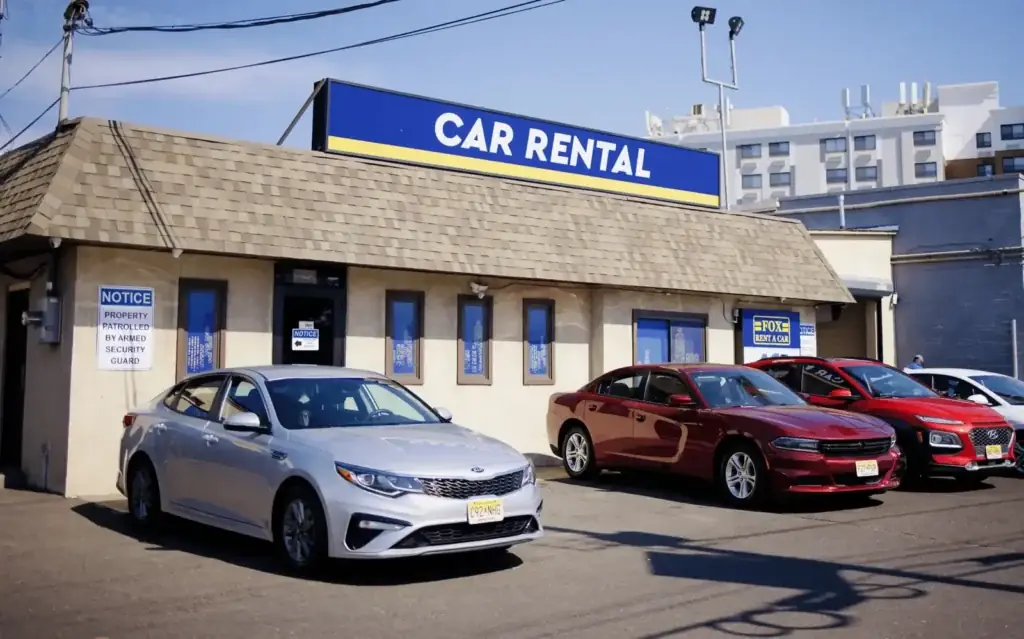
At its core, evaluating cheap car rental options requires recognizing that true value in ground transportation is determined by the total cost of mobility rather than the advertised daily base rate. The phrase describes the systematic identification, auditing, and selection of temporary vehicle access models that optimize baseline costs while neutralizing hidden fee liabilities, high-risk insurance overlaps, and logistical delays.
Systematically evaluating cheap car rental options involves separating genuine operational value from compromised, high-risk inventory. In ground travel distribution, a $15 daily rate offered by a peripheral off-airport rental operator can easily mask mandatory $30 daily insurance requirements, rigid mileage caps, an hour-long shuttle connection, and aggressive damage claim practices. Conversely, a $38 daily rate secured directly through a major fleet operator using an eligible corporate discount code, including unlimited mileage and transparent credit card primary insurance coverage, delivers far superior structural value.
The fundamental gap in vehicle rental evaluation occurs when initial search engine listings collide with counter-desk execution:
-
Advertised Base Rate vs. Total Settlement Folio: Headline rates exclude municipal concession recovery fees, facility charges, vehicle licensing fees, state taxes, and mandatory security deposit holds.
-
Collision Damage Waiver (CDW) Overlaps vs. Primary Coverage Gaps: Rental counters aggressively market proprietary loss-damage waivers ($20 to $45 per day) to drivers who may already possess primary coverage through personal auto insurance policies or premium credit cards.
-
Geographic Concession Surcharges: Renting directly from airport counters incurs airport concession recovery fees (often 10% to 20% of the base rental), while off-airport neighborhood locations bypass these municipal surcharges entirely.
Misunderstandings around vehicle rental acquisition generally stem from three analytical errors:
1. Conflating Baseline Vehicle Tiers with Actual Utility
Travelers frequently reserve the lowest available car class—typically an “Economy” or “Compact” model—assuming it provides the optimal balance of price and function. However, if traveling with four adult passengers and multi-piece luggage, or traversing mountainous terrain, an underpowered compact vehicle increases fuel consumption, creates physical discomfort, and risks vehicle damage under heavy load, neutralizing the minor daily rate differential of an Intermediate or Standard SUV upgrade. Identifying the best cheap car rental options requires matching vehicle performance characteristics with real-world geographical demands.
2. Treating All Distribution Channels as Equal
Booking through a third-party online travel agency (OTA) or discount voucher broker often locks the rental into a prepaid, non-refundable state. When flight delays occur, or travel plans shift, the rental counter staff at the destination terminal are frequently unable to modify, extend, or transfer third-party voucher reservations, forcing drivers to forfeit initial funds or pay prevailing walk-up rates.
3. Ignoring Credit Authorization Lockup Dynamics
Securing a low rental rate requires presenting an accepted payment method at the counter. While major credit cards trigger temporary authorization holds ($200 to $500), using a debit card for rental authorization often results in immediate cash withdrawal holds ($500 to $1,500), mandatory credit checks, proof of return travel validation, and delayed post-rental refund processing.
Learning how to evaluate cheap car rental options effectively converts ground transportation selection from a stressful, high-risk counter negotiation into a controlled, highly predictable logistics operation.
Deep Contextual Background: The Evolution of Fleet Pricing Models
To understand why vehicle rental pricing remains highly volatile and unbundled, one must examine the structural evolution of the auto rental industry over the past half-century.
-
1960s–1980s (Corporate Fleet Consolidation Era): The market was dominated by legacy corporate brand families operating primary counters inside airport arrival halls. Rates were relatively static, published in seasonal paper matrices, and bundled with basic insurance liabilities.
-
1990s–2000s (GDS Integration and Online Booking Disruption): Global Distribution Systems (GDS) digitized fleet reservations. Online travel agencies emerged, exposing consumers to transparent price comparisons. Rental operators responded by unbundling base rates from airport fees, licensing surcharges, and optional protection products to capture top search engine positions.
-
2010s (Corporate Parent Consolidation & Yield Algorithms): Consolidation transformed the industry into a market dominated by Enterprise Holdings (Enterprise, National, Alamo), Avis Budget Group (Avis, Budget, Payless), and Hertz Global Holdings (Hertz, Dollar, Thrifty). Advanced yield management algorithms began adjusting daily rates dynamically based on real-time fleet utilization rates and flight arrival density.
-
2020s–Present (P2P Market Entry and Dynamic Unbundling): The rise of peer-to-peer vehicle sharing platforms (Turo, Getaround) and app-based regional mobility services disrupted traditional rental models. Legacy operators intensified automated fleet yield monitoring, dynamic mileage capping, and automated digital damage scanning, while consumer evaluation of cheap car rental options expanded across non-traditional fleets.
The Economics of Fleet Utilization and Perishable Inventory
Auto rental operators run capital-intensive businesses governed by depreciation rates, fleet financing costs, and maintenance overhead. A rental car sitting unrented on a lot represents an absolute, unrecoverable loss of daily revenue potential.
To maximize Revenue Per Available Fleet Day (REVAF), operators utilize predictive analytics to adjust prices dynamically. When airport arrivals surge or local events compress regional fleet supply, automated systems escalate daily base rates. Conversely, when fleet utilization drops below optimal thresholds (typically 80% to 85%), operators dump excess inventory onto opaque booking channels, discount brokers, or off-airport corporate programs.
The Structural Shift to Unbundled Fee Architectures
As comparison engines began sorting search results strictly by nominal price, rental operators modified their financial structures. Base rates were artificially lowered to capture high placement on aggregator grids, while non-optional operational costs—such as vehicle license recovery fees, energy surcharges, and customer facility charges (CFCs)—were separated and added to final settlement folios.
Understanding this historical transition explains why navigating the modern rental market requires auditing the total contract cost rather than evaluating raw daily baseline rates.
Conceptual Frameworks and Mental Models for Rental Evaluation
Evaluating ground transportation options requires applying analytical frameworks that model total financial exposure, legal protection, and time-value friction.
1. The Total Cost of Mobility (TCM) Equation
This model calculates the true economic cost of a vehicle rental by summing all mandatory fees, operational inputs, and risk premiums into a single comparative equation. Total Cost of Mobility combines the daily base rate multiplied by rental days with mandatory location surcharges, taxes, insurance exposure, fuel outlay, parking fees, and transit friction costs.
-
Application: A vehicle advertised at $20/day at an off-airport lot requiring a $30 round-trip taxi connection, $15/day mandatory local fee, and $20/day parking at the final destination carries a 3-day TCM of $225 ($75/day). An airport-adjacent property offering a $45/day inclusive rate with free hotel parking carries a 3-day TCM of $135, proving far more economical.
-
Limitations: Requires accurate pre-booking estimation of fuel consumption, toll road structures, and destination parking rates.
2. The Insurance Overlap and Protection Pyramid
This risk management model evaluates a driver’s legal exposure by auditing primary, secondary, and tertiary coverage layers before counter arrival. Layer 1 relies on standalone CDW or loss damage waivers (purchased at the rental counter or supplied primarily by select credit cards). Layer 2 applies personal auto insurance policies (covering collision, comprehensive, and third-party liability). Layer 3 incorporates secondary credit card benefits, which cover insurance deductibles and excess fees remaining after personal insurance pays out.
-
Application: A driver with a personal auto policy containing broad comprehensive and collision coverage, paired with a credit card offering primary auto rental protection, can safely decline the counter’s $30/day Loss Damage Waiver (LDW). Conversely, an international driver lacking personal auto coverage or credit card protection must factor mandatory CDW and third-party liability coverage directly into their baseline pricing evaluation.
-
Limitations: Coverage terms vary significantly by jurisdiction, vehicle classification (e.g., full-size vans or luxury vehicles are often excluded), and rental duration limits.
3. The Counter Friction vs. Proximity Index (CFPI)
This framework measures the logistical and operational time loss associated with specific rental pick-up channels relative to overall schedule efficiency.
-
In-Terminal Counters: Feature zero shuttle delays, high municipal concession fees, and rapid exit procedures.
-
Off-Airport Hubs: Require a 20-to-45-minute shuttle ride, offer lower concession fees, but introduce risks of queue delays and fleet depletion.
-
Peer-to-Peer Delivery: Offers direct curb or driveway pickup, variable vehicle cleanliness, and direct coordination with individual vehicle owners.
-
Application: A business traveler arriving on a tight 24-hour schedule values terminal-adjacentpickupp highly; spending 45 minutes on an off-airport shuttle to save $15 introduces severe time friction. A leisure traveler on a 14-day regional vacation easily absorbs the shuttle transition to capture cumulative daily savings.
-
Limitations: Shuttle frequency and off-airport counter staffing fluctuate based on local operational conditions.
Primary Fleet Categories, Rental Models, and Structural Trade-Offs
Navigating the vehicle access market requires understanding the distinct operational categories, fleet sources, and contract terms available to modern consumers.
| Mobility Category | Inventory Sourcing | Primary Advantages | Structural Vulnerabilities | Target Traveler Profile |
| Legacy Airport Operators | Enterprise, Avis, Hertz corporate fleets | Terminal proximity, new fleet units, 24/7 counter operations. | High airport concession fees, aggressive sales for add-ons. | Business travelers, tight schedule itineraries, loyalty members. |
| Off-Airport Independents | Regional franchisees, discount operators | Lower baseline rates, reduced municipal facility fees. | Shuttle delays, older vehicle fleets, strict mileage/geographic limits. | Extended leisure stays, budget-conscious travelers. |
| Peer-to-Peer (P2P) Platforms | Private individual owners (Turo, Getaround) | Specific vehicle choice, custom pickup locations, unique models. | Owner cancellation risks, variable maintenance, high cleaning fees. | Niche vehicle seekers, regional road trippers, suburban renters. |
| Opaque Broker Platforms | Liquidated excess fleet inventory | Deep discounts (20%–40% below public rates) on major brands. | Non-refundable terms, unrevealed operator until payment is complete. | Flexible leisure travelers, price-sensitive planning. |
| Car-Sharing / Micro-Rentals | Zipcar, station-based app fleets | Hourly billing, included fuel/insurance, instant app unlocking. | High hourly rates, strict return location bounds, late return fees. | Short urban errands, multi-stop intra-city trips. |
1. Legacy In-Terminal Airport Operators
Operating directly out of airport arrival halls, legacy carriers maintain large, modern vehicle fleets with high turn velocity. They integrate with airline loyalty systems and offer automated bypass-the-counter options for elite members. The trade-off is direct exposure to municipal airport concession fees and higher baseline pricing.
2. Off-Airport Independent Operators
Positioned outside airport boundaries, independent operators transport drivers via dedicated shuttle buses. By operating on lower-cost real estate, they avoid heavy airport terminal concession taxes, allowing them to offer lower base rates. However, fleet units may exhibit higher mileage, and staffing levels at off-terminal counters are often lower during peak arrival windows.
3. Peer-to-Peer Vehicle Sharing
P2P platforms connect individual vehicle owners with renters. This model bypasses traditional rental counters entirely, allowing drivers to select the exact vehicle make, model, and year rather than a generic car class. Structural trade-offs include variable owner responsiveness, non-standard drop-off procedures, and platform-specific insurance structures that must be reviewed carefully.
4. Opaque Discount Brokers
Wholesale rate brokers sell unbranded excess inventory from major rental operators. Travelers select a destination, date range, and car tier, receiving a steep price discount in exchange for accepting an unrevealed operator until payment is processed. Rates are almost universally non-refundable and non-changeable, making them viable cheap car rental options only when travel dates are completely locked.
Detailed Real-World Scenarios and Operational Decision Points
Analyzing realistic operational scenarios illustrates how fleet mechanics function in practice and highlights decision points when evaluating cheap car rental options.
The One-Way Cross-Country Road Trip
A traveler plans a four-day one-way drive from Chicago to Denver. Searching standard aggregators reveals a daily rate of $25 per day, but the final booking screen reflects a total cost of $580.
-
The Operational Friction: The rental operator applies a $400 “drop charge” (drop fee) to compensate for relocating the vehicle back to its home region.
-
Decision Path: The driver audits alternative operators and discovers a seasonal “fleet repositioning special.” During specific spring or autumn months, rental operators need to move large volumes of vehicles from northern states to southern or western tourist hubs.
-
Resolution Strategy: By switching to a dedicated repositioning deal, the driver secures a one-way rate of $15 per day with the drop fee completely waived, dropping total out-of-pocket spend from $580 to $60.
The International Flight Delay and Counter Lockout
A family traveling internationally reserves a compact vehicle through an independent off-airport discount broker. Their inbound flight is delayed by four hours, pushing arrival from 8:00 PM to midnight.
-
The Operational Friction: The independent off-airport shuttle stops operating at 10:00 PM, and the rental desk closes at 11:00 PM. The rental contract contains a strict “no-show” clause that voids the reservation two hours past the scheduled pick-up time.
-
Second-Order Effects: Upon arrival at midnight, the family is stranded at the terminal. They are forced to take a $50 taxi to a hotel and return the next morning, where the operator declares the original low rate forfeited and requires a new walk-up booking at double the original cost.
-
Resolution Strategy: When booking late-evening arrivals or long-haul flights prone to delays, travelers seeking reliable cheap car rental options must select in-terminal operators with 24-hour desks, provide their flight number during reservation to protect against flight delays, or utilize major brand loyalty programs that hold reservations automatically.
Planning, Cost, and Resource Dynamics
Navigating vehicle rental pricing requires dissecting mandatory baseline charges, optional add-ons, and indirect risk exposures.
| Expense Category | Typical Financial Range | Assessment Structure | Primary Avoidance / Reduction Protocol |
| Airport Concession Recovery Fee | 10% – 22% of base fare | Mandatory municipal tax on airport counters | Rent from neighborhood, off-airport locations via local transit. |
| Loss Damage Waiver (LDW/CDW) | $20 – $45 per day | Optional daily insurance product | Utilize primary credit card insurance coverage or personal auto policy. |
| Supplemental Liability Insurance | $12 – $20 per day | Optional third-party injury/property protection | Verify coverage limits on existing personal auto policy. |
| Prepaid Fuel Options | Market rate + 10%–20% | Optional tank purchase at pick-up | Decline prepaid fuel; refill tank within 5 miles of drop-off lot. |
| Toll Pass Convenience Surcharges | $4.95 – $11.95 per day | Administrative daily fee + actual tolls | Bring a personal transponder or pay toll authorities directly online. |
| Additional Driver Surcharges | $10 – $15 per day | Daily fee per secondary operator | Join free loyalty programs or utilize memberships that waive spouse fees. |
| Young Driver Surcharges (Under 25) | $20 – $35 per day | Daily risk fee for younger drivers | Leverage specific association codes (AAA, corporate) that waive fees. |
Direct vs. Indirect Ancillary Leakage
The baseline rental rate is frequently a fraction of the final financial transaction. Ancillary cost leakage occurs across several operational categories:
-
Toll Transponder Traps: Rental operators equip fleets with automated toll-reading devices. Passing through a single electronic toll booth can trigger an administrative “convenience fee” of $5.95 for every day of the rental period, even days when no tolls were incurred.
-
Fuel Reconciliation Rates: Returning a vehicle with less than a full tank without purchasing prepaid fuel results in the operator charging exorbitant refueling rates—often $9.00 to $15.00 per gallon—plus an administrative refueling charge.
-
Undisclosed Administrative Fees: Operators frequently charge administrative handling fees ($30 to $50) simply for processing traffic camera tickets, parking violations, or toll notices incurred by the driver.
Tools, Strategies, and Support Systems
Minimizing expenses and eliminating contract surprises requires applying disciplined research routines prior to reserving a vehicle.
Multi-Channel Rate Aggregation and Comparison
Initiate research across meta-search tools to track baseline rates across major brand families. Utilize dedicated rate-tracking platforms that automatically monitor price drops post-reservation and notify drivers to rebook when rates decline.
Discount Code and Membership Audit
Before confirming a reservation, test eligible corporate codes, professional association memberships (AAA, AARP, bar associations), and loyalty program discounts. Verify whether the code includes valuable perks, such as waived additional driver fees or included loss damage waivers.
Insurance Overlap and Credit Card Verification
Contact your credit card issuer to obtain a written Guide to Benefits. Confirm that the card provides primary coverage (which pays out before personal auto policies, preventing rate hikes on personal insurance) and check for geographic or vehicle class exclusions (e.g., Italy, Ireland, luxury SUVs, or vans are frequently excluded).
Risk Landscape and Failure Modes
Failing to evaluate rental contracts systematically can expose drivers to legal liabilities, high administrative costs, and severe travel disruptions.
Choosing low-tier, cheap car rental options without auditing terms frequently leads to unexpected counter charges, denied insurance claims, and property disputes. Unverified off-airport operators may enforce rigid geographic bounds that void coverage if the vehicle crosses state lines. Furthermore, failing to document pre-existing vehicle damage upon pick-up leaves drivers vulnerable to false damage assessments upon return.
1. Pre-Existing Damage False Claims
Rental operators utilizing automated check-in scanners or rapid return lanes may attribute pre-existing scratches, dented rims, or windshield chips to the most recent driver.
-
Impact: The operator charges the driver’s credit card for repairs ($300 to $1,500) plus “loss of use” administrative fees while the vehicle is being repaired.
2. Primary Insurance Coverage Disqualification
Drivers assuming their personal insurance or credit card covers international or off-road rentals may discover critical coverage gaps post-incident.
-
Impact: In the event of an accident, the driver faces direct personal liability for vehicle replacement costs, third-party medical expenses, and operator legal fees.
3. Credit Card Authorization Failure
Arriving at a rental counter without sufficient available credit line reserves can lead to immediate cancellation of the reservation.
-
Impact: If the card issuer declines the security hold authorization, the operator will refuse to release the vehicle, forcing the driver to seek expensive last-minute alternatives.
Governance, Maintenance, and Long-Term Adaptation
Executing a rigorous inspection and contract management workflow safeguards drivers against invalid claims and billing errors.
| Rental Phase | Key Operational Action | Objective Outcome |
| Pre-Departure | Obtain written credit card primary insurance confirmation | Establish clear coverage terms before travel |
| Counter Arrival | Decline unnecessary CDW, prepaid fuel, and toll passes | Eliminate ancillary fee inflation on initial contract |
| Vehicle Inspection | Take high-resolution video/photos of exterior, interior, and fuel/odometer | Secure date-stamped evidence of pre-existing condition |
| Return Drop-Off | Photograph returned vehicle on lot; obtain printed/digital receipt | Prove timely return with fuel tank filled and zero damage |
The High-Value Pick-Up Inspection Protocol
To prevent false damage claims, perform a thorough physical and digital inspection before driving off the lot:
-
Conduct a Circumferential Sweep: Walk slowly around the vehicle exterior, capturing continuous high-resolution video of all body panels, bumpers, mirrors, glass, and wheels.
-
Inspect Under-Bumper Surfaces: Low front air dams and rear bumpers frequently contain pre-existing scuffs that standard walk-around checks miss; photograph these low areas specifically.
-
Capture Interior and Odometers: Photograph the fuel gauge, odometer reading, and interior upholstery condition while the engine is running on the lot.
-
Demand Attendant Sign-Off: If any scratch larger than a coin or dent larger than a golf ball is present, ensure the lot attendant physically notes it on the rental slip before exiting the security gate.
Measurement, Tracking, and Evaluation
Tracking quantitative leading indicators and post-rental signals helps travelers evaluate whether cheap car rental options delivered genuine structural value.
| Metric Category | Specific Observational Indicator | Operational Benchmark |
| Leading Indicator (Pre-Booking) | Ratio of baseline daily rate to total estimated settlement folio | Base rate should represent at least 65% of total cost (excluding optional insurance) |
| Leading Indicator (Pre-Booking) | Customer review sentiment on off-airport shuttle wait times | Average shuttle wait times under 15 minutes during operating hours |
| Lagging Indicator (Post-Rental) | Time elapsed for authorization security hold release | Full deposit release processed within 3 to 5 business days post-return |
| Lagging Indicator (Post-Rental) | Total out-of-pocket mobility spend vs. initial project budget | Zero unapproved post-rental charges for fuel, tolls, or administration |
Leading Indicators (Pre-Booking Verification)
-
Fee Transparency: Operators that clearly itemize taxes, facility charges, and security deposit requirements upfront demonstrate transparent billing practices, reducing counter surprises.
-
Fleet Age and Maintenance Integrity: Positive customer feedback regarding clean, low-mileage vehicles indicates proper ongoing fleet management.
Lagging Indicators (Post-Rental Evaluation)
-
Zero Discrepancy Folios: Final credit card charges match your audited checkout receipt exactly, with zero secondary charges added for tolls or refueling.
-
Prompt Hold Release: Credit holds dissolve promptly within standard banking timelines without requiring follow-up calls to rental accounting departments.
Common Misconceptions and Oversimplifications
Myths surrounding auto rentals persist due to outdated travel habits, aggressive counter sales tactics, and confusing insurance terms.
Debit Cards Are Identical to Credit Cards at the Counter
While debit cards are accepted by many major rental operators, they trigger strict screening requirements—including credit checks, proof of round-trip travel tickets, utility bill verification, and substantial cash deposit holds frozen directly in your checking account.
Buying the Counter’s Loss Damage Waiver Means You Are Fully Covered
Counter-sold LDW products protect the vehicle itself, but they frequently exclude damage caused by reckless driving, off-road usage, interior damage, or lost keys. Furthermore, LDW does not automatically include Third-Party Liability protection for damages caused to other vehicles or property.
Off-Airport Rentals Are Always Cheaper Than Airport Counters
While off-airport locations avoid airport concession fees, high municipal taxes, additional local transit costs (taxis or rideshares to the lot), and restricted operating hours can offset initial base rate savings when searching for cheap car rental options.
Unlimited Mileage Means You Can Drive Anywhere
Rental contracts offering “unlimited mileage” frequently restrict vehicle operation to specific adjacent states or geographic regions. Crossing unauthorized state or national borders can void insurance coverage and trigger severe per-mile penalties for the entire rental period.
Car Rental Prices Only Increase as Your Travel Date Approaches
Unlike airline seats, which generally spike in price near departure, rental car rates fluctuate in both directions based on live fleet availability. Rates frequently drop 7 to 14 days prior to arrival if an operator has surplus unbooked inventory on the lot.
Ethical, Practical, or Contextual Considerations
Evaluating the vehicle rental market involves recognizing the economic and environmental considerations associated with personal transit.
The commercial mobility market balances two competing operational priorities:
-
Operator Financial Realities: Managing high vehicle acquisition costs, rapid asset depreciation, insurance risk management, and seasonal demand swings.
-
Consumer Mobility Demands: Expecting low baseline prices, flexible cancellation terms, transparent contract terms, and clean, safe vehicles.
While personal vehicle rentals offer high schedule independence, they also contribute to urban congestion, parking pressure, and carbon emissions. Evaluating high-efficiency hybrid fleet options, utilizing public transit in dense urban cores, and renting larger vehicles only when passenger or cargo volume requires it allows travelers to balance financial discipline with responsible environmental practices.
Conclusion
Navigating cheap car rental options successfully requires moving past low headline rates to evaluate total mobility costs, contract terms, insurance overlaps, and physical vehicle inspection routines. Securing true value in ground transportation depends on rigorous pre-booking research, careful payment selection, and disciplined execution at the rental counter.
By utilizing credit cards with primary collision coverage, declining unnecessary counter add-ons, performing thorough photo/video inspections prior to driving off the lot, and tracking rate drops post-reservation, travelers can eliminate unexpected fees and maintain complete financial control over their ground travel choices. Approaching vehicle procurement with analytical rigor ensures that the convenience, mobility, and freedom of a rental car are achieved without unnecessary expense or legal exposure.